In the high-stakes world of 2026 healthcare, data is the most valuable life-support system in your arsenal. It is the pulse of your clinical decision-making. Yet, for many providers, this vital data remains locked inside a digital fortress, a legacy EHR system that hasn't evolved significantly in a decade. While the medical world has leaped forward with genomic medicine and robotic surgery, many IT departments are still wrestling with interfaces designed for the early 2000s.
If your IT team is currently burning 80% of their annual budget just to "keep the lights on" for a monolithic system that refuses to talk to other applications, you aren't managing a database; you are dragging a "Legacy Anchor." This anchor doesn't just sit there; it actively erodes your patient outcomes, burns out your clinicians with administrative friction, and renders "innovation" an expensive buzzword rather than a tangible reality.
At Kellton, we don’t believe in the reckless rip and replace philosophy that puts your operations at risk. We believe in intelligent Legacy EHR Modernization. This is a surgical, strategic approach where we turn your legacy EHR systems into high-velocity, interoperable engines using FHIR-led Product Engineering. We don't just fix what’s broken; we build what’s next.
The Cost of Avoiding Legacy EHR Modernization: Why Legacy EHRs are Failing Today
For years, the healthcare industry operated in comfortable, isolated silos. Your hospital had its ecosystem, the local pharmacy had theirs, and the specialist across town used a third, completely incompatible platform. While this fragmentation was an annoyance in 1998, in the interconnected world of 2026, it has become a massive liability. Patients today expect their data to follow them seamlessly, and outdated, legacy EHR systems simply weren't built for that level of mobility.
Most legacy systems are monolithic by design. In technical terms, this means the user interface, the database, and the business logic are all tangled together, like a giant bowl of spaghetti. When you want to introduce a single modern feature, perhaps a mobile app for real-time vitals monitoring, you can’t just plug it in. You are forced to unweave and rebuild the entire bowl, leading to astronomical costs and months of delays.
The real-world results of choosing to not modernize legacy systems for EHR infrastructure are dangerous:
- Deep Data Fragmentation: Clinicians are forced to play detective, looking at incomplete patient histories because data from the last urgent care visit is trapped in an unreadable format.
- Security Vulnerabilities: Aging codebases are playgrounds for modern cyber-terrorists. Every day you run a legacy system without modern security patches, you are extending an open invitation to ransomware.
- Compliance Risk: Government mandates for data transparency and patient access are becoming stricter. If your system can't export data instantly, you aren't just behind the times—you’re out of compliance.
What is the FHIR-First Future?
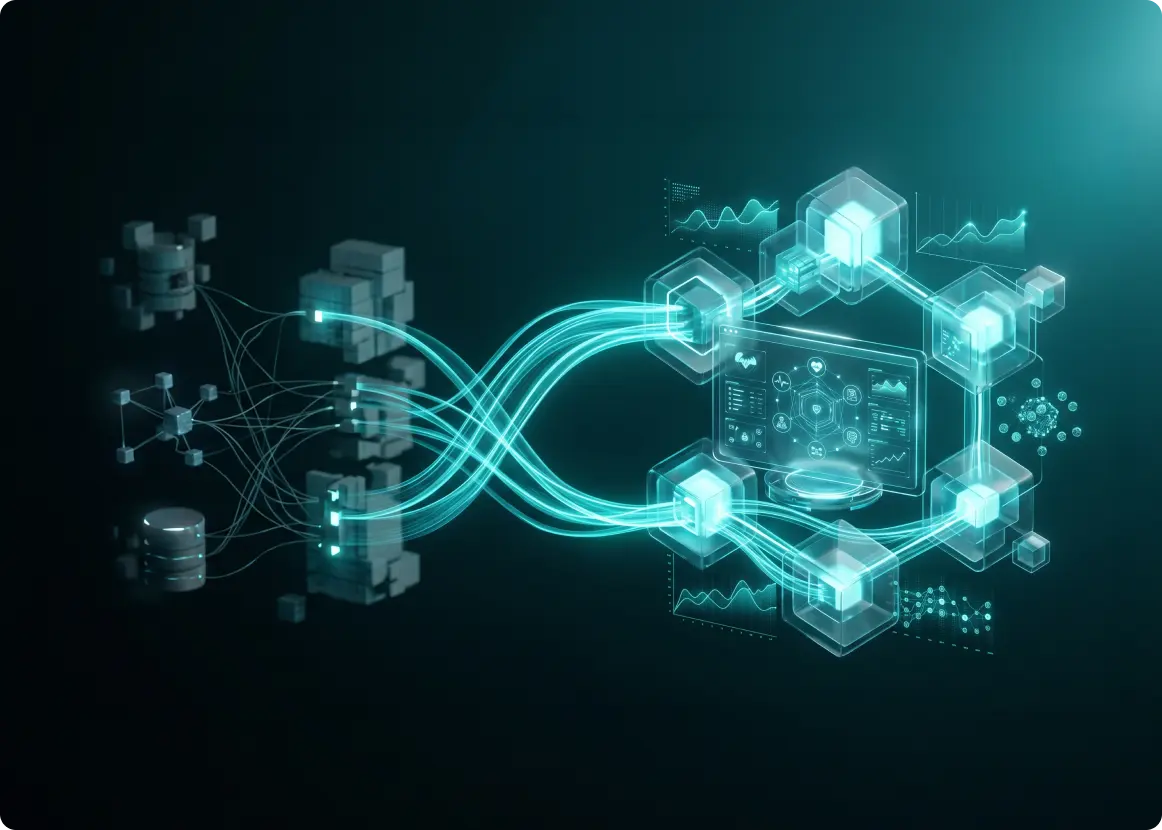
The global healthcare community has finally found its "Universal Translator": a standard called FHIR (Fast Healthcare Interoperability Resources). If legacy data is like a handwritten scroll, FHIR is a high-speed fiber-optic cable. It allows completely different systems—from a startup’s wearable device to a university’s research database—to speak the same language using modern APIs (Application Programming Interfaces).
Achieving comprehensive Legacy EHR Modernization doesn’t require a "demolition day." Instead, it requires Strategic Refactoring. At Kellton, we wrap your old system in a sophisticated API layer. This layer acts as a translator, allowing your "old" data to communicate with the "new" world in real-time. This is where Kellton’s Product Engineering prowess turns a technical hurdle into a competitive advantage, ensuring your legacy assets can finally participate in the modern digital ecosystem.
The Kellton Blueprint: How We Modernize Healthcare Systems
Modernizing a healthcare system is the technical equivalent of performing open-heart surgery while the patient is running a marathon. There is no room for "oops," and you absolutely cannot afford downtime. Our product engineering subservices work in a synchronized symphony to ensure that the transition to modernized EHR systems is invisible to your staff but transformational for your business.
1. Digital Application Development: The API Wrap
Instead of the high-risk "total overhaul" approach, we advocate for API-led connectivity to modernize legacy systems for EHR performance. We build a suite of modern, cloud-native microservices that sit gracefully on top of your legacy EHR core. This architecture allows your old system to feed critical data into a sleek, modern interface without disturbing the underlying, decades-old code.
Insight: By moving to a modular microservices architecture, you can reduce long-term maintenance costs by up to 40% because you only fix the "module" that breaks, not the whole system.
2. Mobile Engineering: From Portals to Partners
Let’s be honest: legacy patient portals are clunky, frustrating, and usually desktop-only. In an era where patients manage their entire lives on their phones, these portals are a major point of friction. We take your newly "unlocked" FHIR data and funnel it into intuitive, world-class mobile applications built for modernized EHR systems.
The Impact: Your patients can book appointments, check lab results, and secure-message their doctors with two taps. By 2026, engaging patients on their mobile devices is no longer a "nice-to-have" feature; it is the baseline expectation for patient retention and satisfaction.
3. Quality Engineering: The Ultimate Safety Net
In healthcare, a software bug isn't just an inconvenience—it’s a clinical risk. Our Quality Engineering teams treat your data as sacred. Throughout the modernization process, we perform rigorous Automated Regression Testing and Continuous Security Audits. We ensure that as data flows from the legacy core to the modern edge, every bit of PHI (Protected Health Information) is encrypted, verified, and shielded from exposure.
4. IoT & Wearables: Remote Monitoring Integration
Once your system is modernized and FHIR-compliant, the "Internet of Medical Things" (IoMT) finally becomes accessible. Whether it’s continuous glucose monitors, smart heart-rate trackers, or post-op recovery wearables, your EHR can now ingest this real-time data stream. This shifts your clinical model from Reactive Care (treating the sick) to Predictive Care (keeping them healthy), powered by real-time alerts.
The 3 Stages of Modernization: Which one are you in?
Every healthcare organization is at a different point on their digital transformation journey, bogged down by varying degrees of technical debt. Identifying your current operational bottleneck is the crucial first step toward unlocking your data's true potential through strategic Legacy EHR Modernization. At Kellton, we break this evolution down into three distinct, manageable phases designed to mitigate risk and maximize ROI.
- The Assessment Phase: We perform a deep-dive audit of your current tech stack. We don't guess; we measure. We determine which parts of your system should be "Rehosted" (moved to the cloud), "Refactored" (code improved), or "Replatformed" for better performance.
- The Hybrid Phase: This is where the magic happens. We run your legacy EHR systems and the new modern microservices in parallel. This "Blue-Green" deployment strategy ensures zero downtime and provides a fail-safe environment as we transition your users to the new interface.
- The Innovation Phase: Once your data is "liquid" and flowing through APIs, the real fun begins. Deploying AI for Legacy EHR Modernization opens incredible opportunities. We apply Generative AI and Predictive Analytics to your datasets, helping your clinicians spot trends, predict patient readmissions, and make life-saving decisions faster than ever before.
Stop Drowning in Technical Debt
Is your outdated infrastructure acting as an anchor, holding your entire organization back from the AI revolution? Don’t let outdated technology be the reason you lose top medical talent or patient volume to more agile, tech-forward competitors. Implementing AI for Legacy EHR Modernization can turn these liabilities into assets, providing you with AI-powered EHR systems that elevate clinical workflows. Talk to a Kellton Expert today for a comprehensive, no-obligation System Health Audit.
Click Here to Schedule Your Consultation
Human-Centric Healthcare: It’s About People, Not Code
At Kellton, we never forget that behind every line of code we refactor is a nurse who is exhausted by manual data entry and just wants more time to spend with her patients. Behind every FHIR API we build is a father in a moment of crisis, who needs to instantly share his daughter’s complex medical history with an emergency room doctor in a completely different state.
Executing a strategy to modernize legacy systems for EHR networks isn't merely an IT checkbox; it’s a moral commitment to a higher standard of care. Leveraging AI for Legacy EHR Modernization allows us to use our Digital Business Services to ensure that your technology serves your people—the doctors, the nurses, and the patients—rather than forcing your people to serve the limitations of the technology.
FAQs: Everything You Need to Know About Legacy EHR Modernization
Q1. Will modernization cause downtime in our hospital operations?
Ans. Absolutely not. At Kellton, we utilize the Strangler Fig Pattern. This means we slowly replace old, legacy components with modern services one at a time, much like a vine growing around an old tree. The system stays live 24/7, and the transition to modernized EHR systems is completely invisible to your clinical staff until the new, improved features are ready for use.
Q2. Is FHIR compliance actually mandatory in 2026?
Ans. While specific laws vary by geography, FHIR has effectively become the "cost of entry" for the global healthcare market. If you aren't FHIR-compliant, you will find it nearly impossible to partner with modern insurance providers, pharmacy networks, or government health databases. Interoperability is no longer optional; it’s a requirement for survival.
Q3. How much does modernization cost compared to buying a brand-new EHR?
Ans. Buying a new EHR is a massive capital expenditure that often fails during implementation. Transitioning to AI-powered EHR systems by modernizing your existing, proven system is often 60% more cost-effective. It allows you to preserve the specialized data structures and workflows you’ve spent decades perfecting, while gaining the speed, security, and agility of a modern cloud-native startup.
Q4. How long does the modernization process typically take?
Ans. We believe in delivering value early and often. While a full transformation depends on your legacy core's complexity, a typical Kellton roadmap for Legacy EHR Modernization starts delivering tangible wins—like a new mobile interface or a secure API layer—in as little as 12 to 16 weeks. We build in phases so you see ROI long before the project is "finished."
Q5. How does Kellton ensure our patient data is secure during the move?
Ans. Security is baked into our DNA, not bolted on at the end. We implement a Zero-Trust Architecture where every data access point is strictly verified and encrypted. We conduct continuous, automated penetration testing throughout the development lifecycle to ensure you remain fully HIPAA, GDPR, and SOC2 compliant at every stage of the journey.
Conclusion: The Road Ahead
The Legacy Anchor is a real threat to your organization’s future, but it doesn't have to be a permanent one. By embracing modern Product Engineering and FHIR standards, you can transform your aging EHR from a liability into a springboard for the future.
Whether your goal is to integrate cutting-edge AI, launch a world-class mobile experience for your patients, or migrate fully to AI-powered EHR systems, modernization is the only path forward.